“In this book, Hornok draws on a long experience working in Arab countries to counsel readers on the most effective ways to deal with businesses in the region. The guide begins with a psychological approach to establishing interpersonal connections, urging readers from other cultures to understand their own mindsets and enter into interactions from an open and nonjudgmental perspective. (Problematic emotions are personified throughout the volume; examples of what Hornok calls “Emotional Hinderers“–“Relentless Judgment,” “Aggressive Inner Critic,” and “Incensed Anger Rascal,” among others). Taken together, the book’s elements offer a step-by-step guide to establishing the relationships that make business transactions succeed; as the anecdotes provide many stories of deals and sales achieved through understanding local norms and methods….A detailed, helpful, and well-written guide to developing and sustaining cross-cultural partnerships.”
– Kirkus Reviews. The full review can be found here.
“Impressively informative, expertly written, organized and presented, The Arab Business Code should be considered mandatory reading for any corporate executive wanting to do business with any or all of the Arabic gulf nations and/or their collective associations (including OPEC).”
– James A. Cox, Editor-in-Chief, Midwest Book Review.
“She’s an engaging, informed coach, and business-minded readers will find much here that’s worth considering when it comes to avoiding pitfalls and managing expectations in cross-cultural deal-making.”
– BookLife, a branch of Publishers Weekly.
The Concept of The Emotional Hinderers by Judith Hornok – Workshops
Case Study on the Relentless Judgement: New Business
Maria is a successful businesswoman. Negotiating with diverse nationalities is routine for her, nothing can put her off or confuse her. In a conversation about doing business with China, I experienced a completely new Maria …
The Situation
“Your products would also be interesting for the Chinese market,” I say. Suddenly Maria changes her otherwise balanced manner. “No thanks!” Her tone takes on an aggressive edge, and she says, “Never! The Chinese steal everything! I don’t care at all… All thieves!”
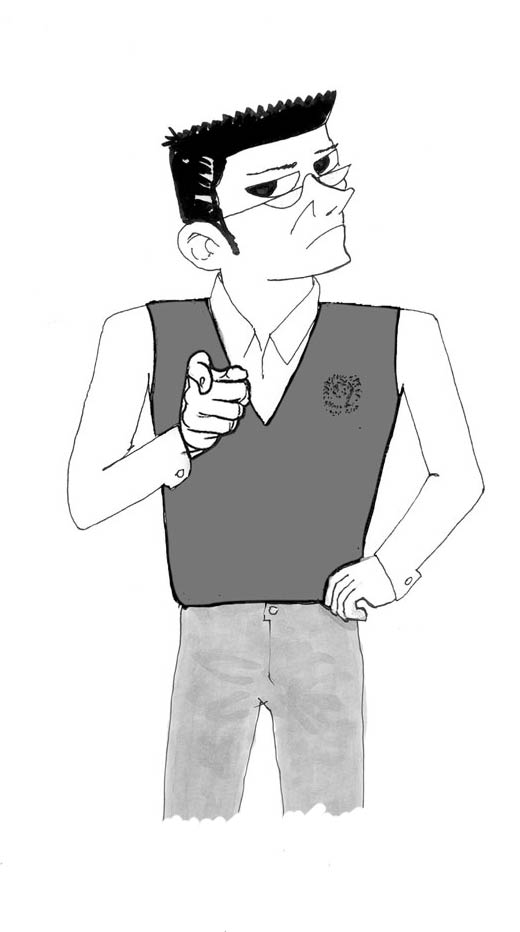
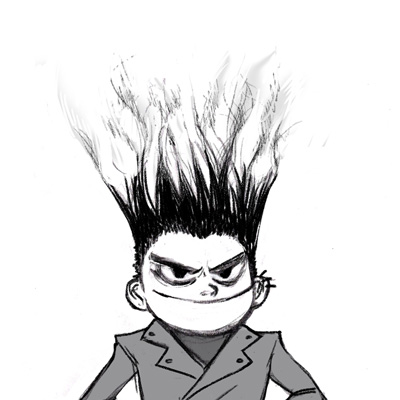
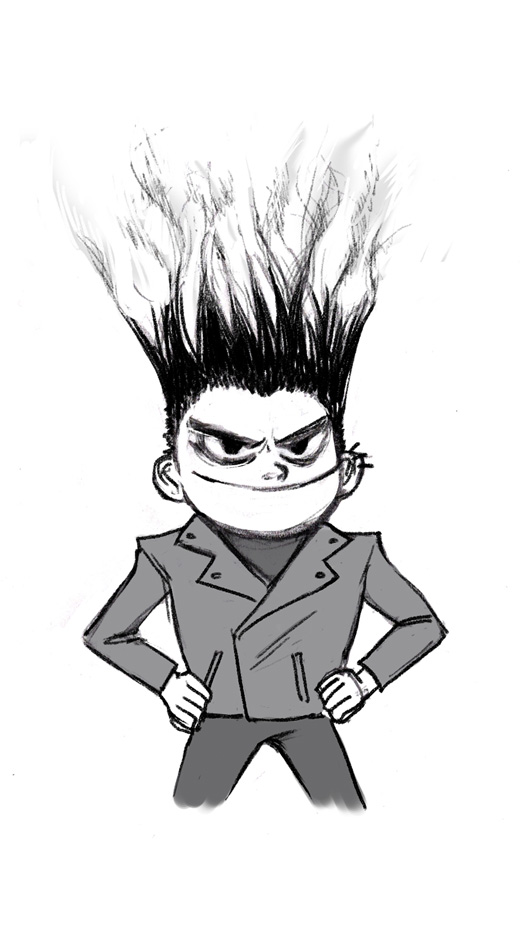
Attention: When an almost fanatical, one-sided way of thinking can be heard: “I know you all! All the same! Simply everyone! …” When generalizations and judgement are established without any evidence at all, and if different perspectives and ways of thinking are not allowed in any way, then one thing is certain: The Relentless Judgement character (picture) has already arrived and is beginning to manipulate.
Sharpen your awareness – apply a technique
Before you miss opportunities – chances that will enhance your life – whether in business or in your private life, listen to an expert tip that gives you the opportunity to take a neutral starting point, to question opinions and to check whether they are correct. This will help you to be successful in the long term.
Toni Stocker, an experienced mountain guide in South Tyrol, counts blind tour-goers as his clientele, as well as Joey Kelly, a member of the famous musical group The Kelly Family.
With extreme hikes, such as the highest point on the African continent, Kilimanjaro in Kenya, Toni knows the challenges in ice and snowy conditions well – his toes were frozen off on a Mount Everest tour.
Toni believes the codes of The Relentless Judgement, like: ´I know everything! I’ve seen everything! I KNOW THIS PERSON EXACTLY!´ can be life-threatening on the mountain. “Because,” says Toni, “even if you did the same tour with the same guest the next day, the same person can have a completely different mental attitude and might no longer be so sure-footed and therefore he puts himself and others at risk.”
That’s why Toni has to anticipate the situation every day. Has to search for the “NOW-IS-STATE” and use all of his senses every single moment – to listen every second to his guest, whom he leads up the mountain. Does he / she put the shoe on the rock? Toni hears that. He doesn’t even have to turn around. Only in this way can he avoid misjudgment everyday, at this moment, and correctly forecast risks and guide his guests and himself safely up and down the mountain.
Toni has an easy technique for creating the perception of the “RIGHT-NOW- STATE.” He explains it the following way:
Case study on the Aggressive Inner Critic: After the first date.
Do you know this situation – the day after the first date? You feel happy – you are sure that this first encounter went really well. The next day you send a message, but there is NO answer …
The Situation
What a great first date: it „clicked“ – unbelievable! The next day I send a message: „Did you get home safely? When will we see each other again?“ – NO answer, not even on the following days. Slowly, doubts arise:“Am I not good enough? Did I do something wrong?“
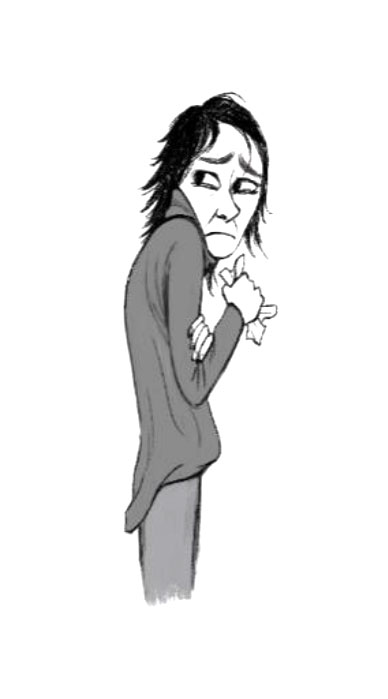
Attention: If your criticizing thoughts increase: “Why is there no reaction? I screwed it up, I´m not intresting enough, too fat, too thin, etc.” If the undertone of your thoughts sounds sneering, then The Aggressive Inner Critic (pictured) has already arrived and is starting to use his manipulation techniques to convince you: You are not good enough.
Sharpen your awareness – apply a technique
Before giving in to your self-doubts, which can even take self-destructive forms, even though you don’t know the real reasons for the other’s behavior, let’s consider together how to turn the nagging of “The Aggressive Inner Critic” into a healthy form of productive criticism. Thus creating satisfaction for yourself and credibility towards others.
THE BEST WAY TO MANAGE THE AGGRESSIVE INNER CRITIC IS: SELF CONFIDENCE
Approach: knowing how „to calm“ inside yourself, that‘s the first important step.
I remember horses – how challenging they are when dealing with people – how ruthlessly they throw people who cannot ride out of the saddle. How they enjoy teasing self-doubting people, going up to them to challenge them. With an Aggressive Inner Critic inside yourself you do not have a chance to riding or train with horses.
Horse whisperer David Catchpole confirms this. The native Brit knows what he is talking about. He specializes in difficult horses. Everything that “doesn’t want to listenr” is delivered to him – from the young, wild stallion to the experienced show jumping horse. David says: “You have to appear self-confident and calm when dealing with a horse. That is the top priority, because a horse must be able to trust the rider to make the right decisions in an emergency. Only then can a horse relax and accept a subordinate role in the herd and “listen.” Accordingly, a rider has to be a self-confident, and above all have a relaxed personality towards the horse. The correct posture of the body is particularly important.”
This statement inspired me, because horses are also used in leadership training – to manage employees even better.
What technique does Horse Whisperer David recommend should people learn to build self-confidence in order to transform The Aggressive Inner Critic into a better version?
Many people take the subway: do you know of a situation like this?
The Situation
I’m on the subway, I’m nervous because I’m waiting for a call. It rings. I switch to speakers. “How are you?” I hear from the phone. The subway announcement is loud, very loud – I can hardly understand the voice of the caller, I turn up the volume of the phone and move through the carriage – it is loud in the carriage too – accordingly I raise my voice: “Thank you, but I …”. I look into the faces of the other passengers. One looks at me angrily. Two shake their heads. What the hell, I don’t care. This is an important conversation – I have to make this call now!
Attention: The Bloated Ego (picture) has just arrived – this creature knows only one form of expression: I, I, I … … – this can often be seen when the body is becoming more and more inflated, almost like a balloon about to burst “I, I, I –
Sharpen your awareness – apply a technique
Before you completely lose track – being so “bloated” that you lose your grip; when you no longer perceive what is happening to you and your surroundings – hear an expert’s advice.
Prima Ballarina Liudmila Lwona Konowalowa was born in Moscow, studied at the Bolshoi Ballet school and works with coaches such as Brigitte Stadler (former partner of Rudolf Nureyev). Today, Liudmila dances as a soloist in famous opera houses worldwide, like the Vienna State Ballet. She explains: “With a ‘Bloated Ego’ live on stage, everything can happen, every second. You can miss so much. And then you’ll make mistakes, fail.“
“Therefore, you need to build up a strong, HEALTHY EGO, as the stage is like an x-ray – you cannot fake anything! What you have ‘inside’ your body will show ‘outside.’ You need to work very hard to get an excellent technique. Only that gives you the confidence. You also need to rehearse your emotions beforehand, as they take a lot of your energy. You would not be able to finish even the first act.“
In the last few months since the coronavirus started making headlines around the world, many of us have been confronted with various forms of fear: fear for our lives, survival fear, fear of loss…
But actually, fear is a constant companion and already existed in people before the frightening virus appeared.
Nevertheless, it’s a different kind of fear now. So, what’s different?
As a decoder and inventor of The Emotional Hinderers (a concept that personifies aggressive forms of feelings and emotions), I’ve taken a new look at these Coronavirus times and listened to what business people in America have to say.
We often hear: “The news changes daily and sometimes hourly – by the time a decision is implemented, the reason for that decision may have changed (again)… Which way do we go?” The fear of the unknown is creating many emotional responses.
Usually a crisis has easily identifiable enemies. But this time it is an “invisible enemy.” No one can see this virus and it scares people to not know what they are up against. This enemy can’t be glimpsed or touched, nor do we know where it might appear next. How long will the crisis last? Will there be another wave? To this day, no one really knows how long this will continue, so planning becomes a real issue. If you make a plan preparing for 60 days, what happens if the crisis lasts for 120 days? Will your resources last?
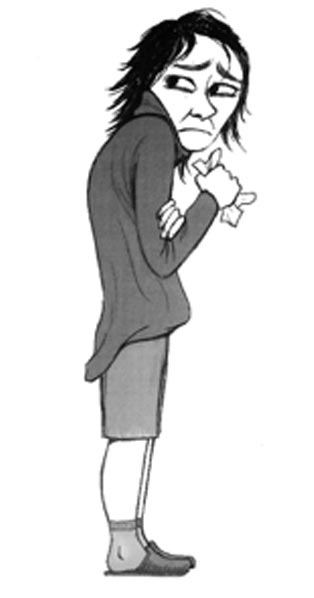
I compare this current situation (also in business) to “the feeling of a threat-scenario” where we do not know who the person is who threatens us, and therefore we cannot act against this person. And we feel there is no end in sight. Often the person who is threatened is stricken by “the Paralyzed Fear character” – one of The Emotional Hinderers. It’s precisely in these situations that this creature starts to operate, when you are not able to breathe, your thoughts circle and people start to panic, as there is no hope for the threat to be identified. This is an opportunistic time for the Paralyzing Fear character as it confirms this creature’s philosophy – better not to act! Stay paralyzed, just stand still. Do not to move!
Expert Advice
So what can we do in this specific time while we are waiting for a way out and trying hard not to fall into depression or hopelessness? What can people do to address this psychological emergency situation? I asked Austrian criminal psychologist, Prof. Dr. Thomas Müller, a business consultant and member of numerous crisis teams who collaborated, among others, with the FBI, for a tip/technique for this moment.
Prof. Müller explains: “Try to become aware of the fact that it is usually not the fact but the idea of the fact that makes us happy or unhappy, as Seneca the Roman philosopher already knew in 65 A.D: How realistic is it really that the state you are imagining will actually occur?”, Prof. Dr. Müller added, “Trust clean and honestly reported information and not your ‘gut feeling’ or superficial internet research.”
Precautionary advice from Prof. Müller: “Think ahead, prepare for what may or may not come, anticipation is an innovative approach. What can each of us can do for ourselves, but also for our family, our company, and our community? Anticipation means at least mentally adjusting to the situation that has not yet happened, not being guided by pure fear-triggering feelings, but being aware of the probability of the occurrence.”
The Paralyzing Fear character must therefore be made to “move” mentally.
This thought made me curious, so I looked at companies and decoded their measures – the actions they took to set the Paralyzing Fear character in motion.
“Move” – have a plan of action for the Present and the Future
Richard Tyler, CEO of Richard Tyler International Inc., is a highly acclaimed sales trainer and management consultant: “I have a client who was just building up her business when the Coronavirus hit. It was frustrating for her, as she had invested so much money and energy; she really didn’t know what to do. She wanted to give up.
I told her: ‘If you stand still and let fear control you nothing good will happen. You have to create a plan of action by asking yourself ‘How can I achieve the same objectives now?’ So we started to brainstorm. I knew where she needed to go, however it was important for me that the ideas came from him. So I kept asking her questions and yes, the fear always tried to interrupt us with words like: ‘If….But…What?’; When it did, I said ‘Keep going!’ And in the end she had a plan and she said: ‘I never thought I could get there.’”
“Move” – Do something good for yourself! It’s the perfect time to back up your “healthy ego!”
Dale Karraker, a businessman who works in the field of aerospace and energy: “I had a client who hadn’t been able to call any clients for many months, because of the situation. And at that time in the United States no barber-shop was open to get your hair done. I knew he looked after himself a lot and usually he goes to the barber every week. So he was talking to me about a ‘threat-scenario’ – long term complications if he couldn’t get out to see people. And he was talking himself into a ‘downward spiral.’ I stopped him and said – ‘Well, just give yourself a haircut.’ And he stopped – and you could even hear his question ‘What the hell do you mean by that?’ And I said – ‘When we finish talking, have a look in the mirror. And if you don’t like how your hair looks, you have to do something about it before you call anyone.’ And he did. I spoke to him two days later and he had gone to the drugstore, purchased electric hair clippers and cut all of his hair off. That is very popular with men now. And he said: ‘I feel much better now’. And started to create new ideas for his clients.”
“Move” – Make everyone a partner in the recovery – compromise with clients, employees
Katharina Plath, owner of Head & Hand PR agency in the luxury sector (interior design, yachts, galleries): “I had customers who told me – we now no longer have the income we had before; or we can no longer produce. We can’t continue to work with you. So, I told them: Let’s take a deep breath together. And there are a few things we can do in the future: Write your landlord. Use social media, Instagram, Facebook. And we found compromises. I’ve continued to work with several clients even though they only paid me a percentage of my fee. I dedicated 100% of my time. You just have to tighten your belt. I’m still paying my team out of my own pocket. I explained to them that they might have financial losses, but they still have a job. And I’m keeping as many of them as I can, inspiring them every day with motivational rituals. My motto is: ‘I can live because I give.’ That’s exactly the credo I live by. And now is the time to strengthen your team, whether it’s satisfied employees or satisfied customers. Because, the day will come when we need each other even more by then we’ll know each other even better.”
What I noticed while decoding this statement: These businesspeople got the Paralyzing Fear character “moving” with a wide variety of strategies and techniques.
This inspired me to come up with a fitness program for the Paralyzing Fear that helps you personally deal with this emotion and even sets Paralyzing Fear in motion. It is a step-by-step approach and you can find it on my website.
And I realized something else: These businesspeople had also successfully managed the other Emotional Hinderers, just like Katharina, who managed the Insatiable Greed character, which would say, “I want more, more, more!!!… Because I’m entitled to it, because I need it…;” and thus ultimately became successful.
Katharina recognized this character, changed her approach and could continue to work. In the meantime, she has – despite the crisis – acquired two new clients.
Try it out for yourself: Take a look at my seven characters, The Emotional Hinderers, and discover which of these creatures is just around the corner from you. Is it really the Paralyzing Fear character, or the Insatiable Greed one, or maybe the Bloated Ego – or perhaps the Incensed Anger Rascal?
How can I ensure the Paralyzing Fear character does not take over, so this creature can’t impact my thinking and my actions – by manipulating with words such as, “Everything could be wrong! Do nothing – just stand still – DO NOT MOVE! That’s what I asked myself.
I have a solution for this: I have created a training plan for this character – step by step.
THE FITNESS PROGRAM FOR getting the Paralyzing Fear to move.
FITNESS PLAN in 3 steps
Get the Paralyzing Fear character exercising
WHAT’S THE GOAL?
This is why I developed a 3-week-fitness-program to get my personal Paralyzing Fear in motion, which I’m using myself and recording in my training diary.
Every week I will explain one program point. And I will present my personal experiences with it.
If you want to train with me, I would be pleased. Perhaps there are parallels to your own experience with your Paralyzing Fear, and I can also bring you success with my program.
Tell me about it, I’m looking forward to receiving your feedback.
Monday: I find it difficult to start walking. The situation during the day was very stressful for me. Most of all mentally. I have a feeling of pressure in my throat, I breathe a little harder. The Paralyzing Fear seems to be taking hold.
Keep going. I quickly put on my sports shoes – and off I go. Don’t even think about it! I say aloud to myself, “Don’t question anything. Just go – step by step!” And always breathe deeply into your stomach and exhale again; I am doing this consistently.
The first 10 minutes are difficult for me because there is still a slight feeling of pressure in my throat. But then, after 20 minutes, I feel a relief. No more feeling of pressure, my breathing has relaxed, is regular. And after 30 minutes the pressure is completely gone. My mind and thoughts are clear. Nothing feels overwhelming or constricting.
Wednesday: Today, walking feels much easier for me. Just the thoughts of how well I felt afterwards, on Monday, motivates me right from the start. And the result after 1 hour, like Monday, is a relaxed body and a relaxed mind.
Friday: Today it’s a bit cold again – not really walking weather. “Come on … You don’t have to do that today. You have been walking all week anyway. That is not necessary. Better stay at home. You could catch a cold! I warn you!!! …” I already know this kind of argument, I tell myself, don’t listen, ignore it and go.
I dress up warmly and start walking – step by step, with regular breathing in and out. After an hour I have the same feeling as Monday and Wednesday: I feel relaxed, without any feeling of pressure. I also come up with a lot of creative ideas while walking. Just wonderful.
Sunday: Today I am really looking forward to my walking – I really missed it yesterday and the sense of how well I feel afterwards. This body relaxation and this clarity in the head, with no feeling of fear, but many creative, positive thoughts.
Result for week 1
At the beginning of the week, the Paralyzing Fear was still manipulating me – leading to a permanent inner dialog. After 15 minutes of walking, my thoughts “sorted” and I became more and more “free” in my head. This feeling then increased by the minute. My thoughts of hopelessness found new approaches and solutions – as if the mind was slowly “emptying” – step by step. After 60 minutes, I felt completely free in my head, and also knew what the next steps should be. I had a plan.
Physically I felt exhilarated, somehow light. And any kind of pressure and heavy breathing was gone.
Case Study of InsatIable Greed: The mega-job-offer
I am sitting with Swiss native Thomas in the car. I admire him for his business success and his trustful business-by-handshake quality. That’s what Thomas promises: he will keep his word – no matter what. Suddenly, I am experiencing a change in the tone of his voice, as he starts to tell me:
The Situation
“Yesterday I had a fantastic conversation – I received a request for a huge job; they were impressed with my products, they appreciated the quality. Wow! What a day!” For a few seconds Thomas seems to be lost in thought, “Well, except for a project this size I will need to compromise my high quality standards, these are different conditions …”
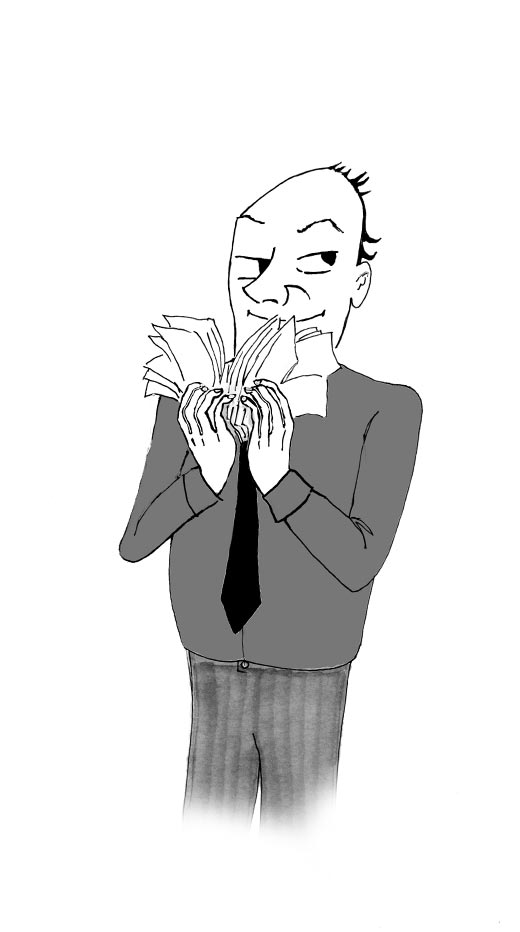
Attention: “Insatiable Greed” (in the picture) has just arrived and starts to manipulate. The catchphrase of this character is: “You will do it! Everything will work out well!” And it silences the cautious with the words: “You will never get this chance again! Be careful not to lose it! Take every opportunity you can get – NOW!
Sharpen your awareness – apply a technique
Before you can be turned by the character Insatiable Greed, who will try to talk to you with the following words: “That’s how the world works today, that’s how you’ll survive. So, what’s the problem? Everything will work out well!” Before you set actions that will be dangerously and irresponsible, and where you, in the worst case, may lose not only all your orders and commissions, but also start to compromise your personal values – listen to the advice of an expert:
Monika Naimer knows the thoughtless actions of the Insatiable Greed character. As a master student of Vera F. Birkenbihl (known as the first popular female motivational trainer/, member of the “Hall of Fame” of the German Speakers Association) she provides companies with brain-compatible methods according to Birkenbihl. For toning down Insatiable Greed, she has the following tip:
Case Study of Incensed Anger Rascal: The Phone Call
Maria is a Viennese woman well-known in our fitness studio for her positive attitude. But today, I’m facing a completely different Maria – angry, enraged, almost fuming. Her face is lit up bright red. She is holding a cell phone in her hand. I ask her if everything is okay? She puts the phone down and begins to talk:
The Situation
“ I’m so mad at my boss. I just got off the phone with her, she’s been abroad for two weeks and, due to the time difference, I’ve been working for her around the clock. Yesterday I sent her an email, to inform her why and how I did two customer cancellations. It was a quiet matter. I described to my boss my diplomatic approach, to let her know that I did in it in a way so as not to upset these clients in the slightest. I put every effort into it. And just now my boss called me and said in a rude tone: “Don’t send me any more trivial emails in the middle of the night! It’s not that hard to follow instructions!”- that hurts! As somebody rammed a knife into my heart. Immediately after the phone call I felt my body heat up, my lips started to quiver. There’s this voice inside me – it’s screaming: “How can my boss be so mean? I do everything for her, for the company – I go the extra mile! Then I get this?!” OK – let’s go for it, I’m going to call her back – NOW and…“
Attention: The Incensed Anger Rascal has just run into Maria (the tennis shoes are an asset to arriving quicker on site – so be careful!) This incensed creature is screaming furiously: “Such a mean lady! Who does she think she is? How dare she talk to me like that? I worked all night, gave the company everything, and this is what I get? This is how I’m rewarded for my efforts: ‘don’t email me in the middle of the night!’ Where does she get the nerve? What kind of statement is that? Ok, that’s it, I’ll show her!”
Sharpen your awareness – apply a technique
Before you write an angry email or maybe even reach for the phone and call this person, to give them a piece of your mind, to verbally strike back, take some advice from an expert, who knows the different profiles of the Incensed Anger Rascal:
Dr. Thomas Müller’s Answer: Strict Discipline
The case analyst and globally recognized Austrian criminal psychologist Dr. Thomas Müller (who collaborated, among others, with the FBI) knows several “crime scenes” where traces of “anger” can be found.
As a profiler, he doesn’t just limit himself to generalizing forms of aggressive outbreaks: “Each person expresses their anger differently,” Dr. Müller explains, “I can be emotional by becoming harsh, using violent language or, in the worst case, lashing out physically. I can also get very aggressive, by becoming aggressive towards myself and stop speaking. Then, silence becomes the most aggressive form of communication.”
CASE STUDY OF FRUSTRATED EXPECTATION: The Inheritance
Simon, single, mid 50s, a cheerful person. Today he seems depressed. During coffee in the old center of town, he talks about what’s upsetting him:
The Situation
„I’m shocked. My mother just told me that she won’t sign over the house to me. For ten years I’ve been looking forward to the house that once belonged to my grandparents, the house I was born in. I was hoping, one day, to spend my retirement there – leave the city apartment and live in the green countryside, maybe even buy an old timer (there’s a garage there). But now my mom has informed me that she’d prefer to leave half the house to my sister, even though they haven’t been in contact for years. Suddenly, that totally doesn’t seem to matter to my mother anymore. Now I can forget my dreams. I can’t afford to buy out my sister for the other half. I’m trying to concentrate on other things, but it’s all I can think about.”
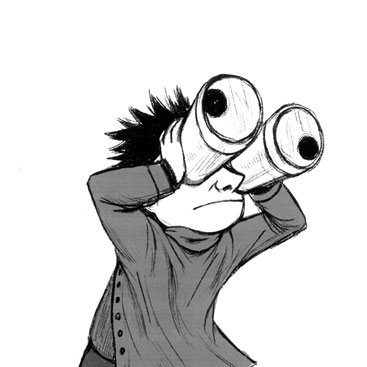
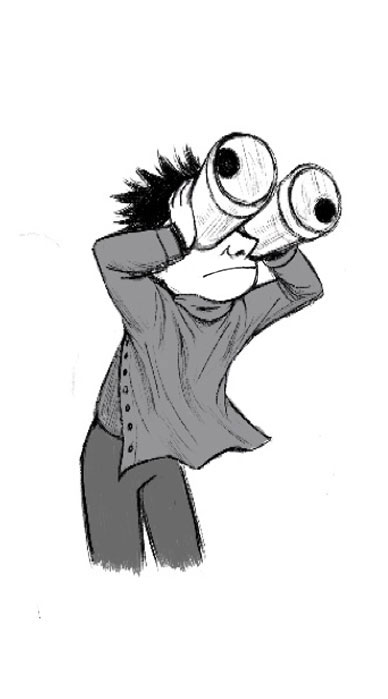
Attention: Here’s where “Frustrated Expectation begins to influence Simon (looking through the spyglasses, awaiting the “promises” to be fullfield): “What am I supposed to do now? Should I even try to convince my mother to leave the house to me? Only two weeks ago she insisted on how important that was to her. And now?” Simon is beginning to get angry and upset. “Frustrated Expectation” is gnawing at Simon: “Why isn’t she keeping her word? It doesn’t make sense! She’ll never decide in my favor. I feel helpless and have lost all hope.”
Sharpen your awareness – apply a technique
Before these thoughts make you crazy, because you constantly have to think of everything that has gone wrong, that has not turned out as you expected, consider these tips from experts to deal with your disappointment; to find peace and to bring your world back into balance.
Expert tips from brain researcher Dr. Jill Bolte Taylor:
Brain researcher Dr. Jill Bolte Taylor, who had a stroke in her left cerebral cortex in 1996, experienced a new dimension of consciousness. She realized what a fantastic feeling it was to be in the right side of the brain – how relaxing it felt.
As an explanation: The left brain helps us organize information in the external world and systematically makes judgements of right/wrong or good/bad. Our left brain circuitry is our stress circuitry, the tool we use to control and create order in our world.
The right brain processes information about the present moment, so this is a terrific tool to help you purposely shift your consciousness into the present moment – and prevent persistent negative thoughts.